Buy debelgischeoptiekgids.be ?
We are moving the project
debelgischeoptiekgids.be .
Are you interested in purchasing the domain
debelgischeoptiekgids.be ?
domain@kv-gmbh.de · 0541-91531010
Buy debelgischeoptiekgids.be ?
Which criterion is it, the root criterion or the quotient criterion?
It is the root criterion. This criterion states that if the limit of the absolute value of the terms of a series to the power of 1/n is less than 1, then the series converges. This criterion is used to test the convergence of series with non-negative terms. **
What are the Abel's convergence criterion and the Leibniz criterion?
Abel's convergence criterion states that if a series ∑an converges and the sequence {bn} is bounded and monotonically decreasing, then the series ∑anbn also converges. This criterion is useful for determining the convergence of a series when the terms can be factored into two separate sequences. The Leibniz criterion is a test for the convergence of alternating series. It states that if the terms of an alternating series satisfy the conditions of being monotonically decreasing and approaching zero, then the series converges. This criterion is particularly useful for determining the convergence of series with alternating signs. **
Similar search terms for Criterion
Top-Angebote
Products related to Criterion:
-
Chicco Sunglasses 5 years+ lunettes de soleil Girl Blue/Pink 1 pcsChicco Sunglasses 5 years+, 1 pcs, Accessoires pour enfants pour enfant, Les yeux des enfants sont beaucoup plus sensibles aux rayons de soleil que ceux des adultes. Pensez à les protéger correctement. Les lunettes de soleil Chicco Sunglasses 5 years+ protégeront la vue des tout-petits, qu’ils gambadent en pleine nature ou se promènent en ville. Le produit : filtre 100 % des UVA, UVB et UVC monture très légère monture flexible, branches qui ne se brisent pas et ne restent pas déformées accessoire pratique idéal pour les promenades et les sorties8,30 €*Shipping: 3,45 €Secure redirect to the provider
-
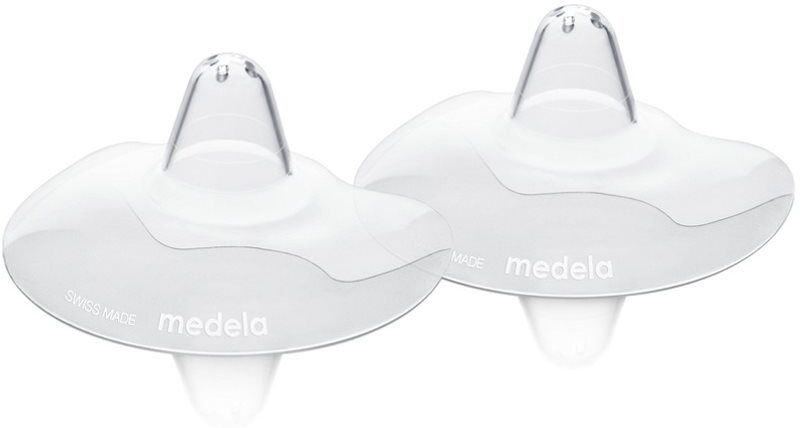
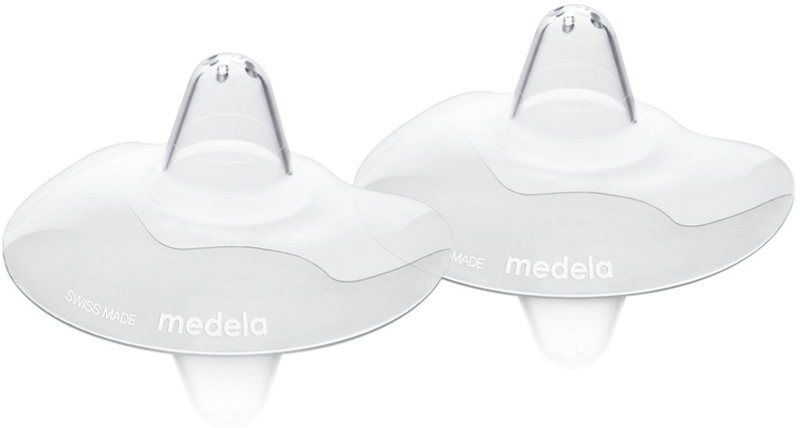
Medela Contact™ Nipple Shields protège-mamelons d’allaitement M (20 mm) 2 pcsMedela Contact™ Nipple Shields, 2 pcs, Protège-mamelons d’allaitement pour femme, Les chapeaux d'allaitement Medela Contact™ Nipple Shields vous aideront à résoudre les problèmes liés à la tétée de votre bébé. Grâce à la forme et au matériel spécialement étudiés, ce moment plein de tendresse entre maman et bébé sera beaucoup plus agréable. Le produit : protège les mamelons douloureux et fissurés corrige les mamelons mal orientés ou plats procure au bébé une sensation confortable et naturelle à chaque tétée protection de forme spéciale permettant au bébé de se blottir contre le sein de la mère pendant la tétée adhère parfaitement au sein en silicone souple15,67 €*Shipping: 3,45 €Secure redirect to the provider
-
Dettol Soft on Skin Kids No-Touch Refill recharge pour doseur de savon sans contact Honey & Vanilla 250 mlDettol Soft on Skin Kids No-Touch Refill, 250 ml, Savons pour femme, Pour les moments où vous devez compter sur des mains parfaitement propres, Dettol Soft on Skin Kids No-Touch Refill le savon est votre meilleure option. Il nettoie efficacement la peau et élimine toutes les impuretés. Le produit : nettoie la peau parfum frais et agréable activité antimicrobienne recharge de savon pour distributeur sans contact Mode d’emploi : Appliquer une quantité appropriée de savon sur la peau humide des mains, faire mousser puis rincer à l'eau.4,20 €*Shipping: 3,45 €Secure redirect to the provider


-
What is the difference between the quotient criterion and the difference criterion?
The quotient criterion and the difference criterion are both used to test for convergence or divergence of a series. The quotient criterion involves taking the limit of the ratio of consecutive terms in the series, and if the limit is less than 1, the series converges. The difference criterion involves taking the limit of the difference between consecutive terms in the series, and if the limit is 0, the series converges. In essence, the quotient criterion focuses on the ratio of consecutive terms, while the difference criterion focuses on the difference between consecutive terms. **
-
What is the exclusion criterion?
The exclusion criterion is a predefined set of conditions or characteristics that are used to determine which individuals or subjects should be excluded from a study or analysis. These criteria are established to ensure that the study results are not influenced by certain factors that could skew the findings or introduce bias. By applying exclusion criteria, researchers can maintain the integrity and validity of their study results. **
-
What is the sterilization criterion?
The sterilization criterion refers to the standard that must be met in order to ensure that a sterilization process has been successful in eliminating all forms of microbial life, including bacteria, viruses, and fungi. This criterion typically involves achieving a certain level of microbial reduction, often measured by a logarithmic reduction factor (e.g. a 6-log reduction for sterilization). Meeting the sterilization criterion is crucial in various industries such as healthcare, pharmaceuticals, and food processing to prevent the spread of infections and ensure product safety. **
-
What is the Leibniz criterion?
The Leibniz criterion is a test used to determine the convergence of an alternating series. It states that if the terms of an alternating series decrease in absolute value and approach zero, then the series converges. In other words, if the terms of the series eventually become smaller and smaller, the series will converge. This criterion is named after the German mathematician and philosopher Gottfried Wilhelm Leibniz. **

Is it a mistake to apply the majorant criterion here instead of the minorant criterion?
Yes, it would be a mistake to apply the majorant criterion instead of the minorant criterion in this case. The majorant criterion is used to show convergence, while the minorant criterion is used to show divergence. Since we are trying to show divergence in this case, the minorant criterion would be the appropriate choice. Using the majorant criterion would not provide the necessary information to prove divergence. **
What is the monotonicity criterion 2?
Monotonicity criterion 2 states that if a change in the value of an input variable leads to a change in the value of an output variable in the same direction, then the partial derivative of the output variable with respect to the input variable is non-negative. In other words, if an increase in the input variable results in an increase in the output variable, then the partial derivative is positive. This criterion is used to determine the relationship between input and output variables in mathematical models and functions. **
Top-Angebote
Products related to Criterion:
-
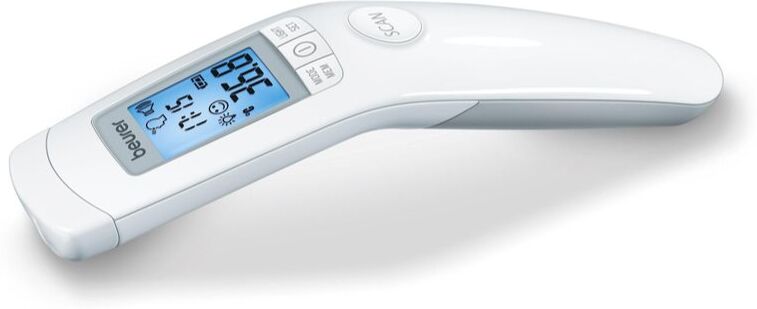
BEURER FT 90 thermomètre sans contact 1 pcsBEURER FT 90, 1 pcs, Thermomètres pour enfants pour homme, Le produit : sans contact fonction d’arrêt automatique écran rétroéclairé la température est mesurée en quelques secondes mesure la température à une distance de plusieurs centimètres signal sonore lorsque la température est élevée l’emballage comprend un étui grand écran mémoire de la dernière mesure signal sonore lorsque la mesure est terminée50,50 €*Shipping: 3,45 €Secure redirect to the provider
-
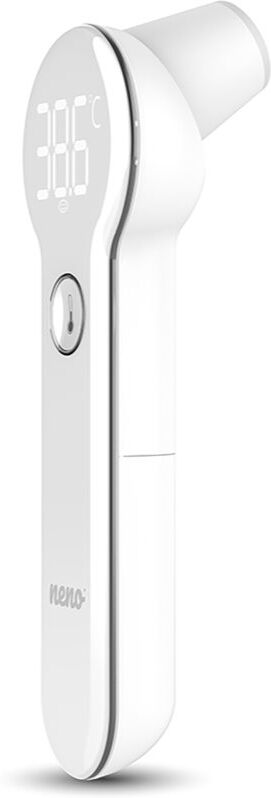
NENO Medic T08 thermomètre sans contact 1 pcsNENO Medic T08, 1 pcs, Thermomètres pour enfants pour enfant, Pour bien prendre soin de bébé, vous devriez toujours avoir le thermomètre pour bébé NENO Medic T08 chez vous. Ce thermomètre vous aidera à déterminer facilement et rapidement la température de votre bébé Le produit : sans contact la température est mesurée en quelques secondes grand écran écran rétroéclairé signal sonore lorsque la température est élevée33,72 €*Shipping: 3,45 €Secure redirect to the provider
-
Chicco Sunglasses 5 years+ lunettes de soleil Girl Blue/Pink 1 pcsChicco Sunglasses 5 years+, 1 pcs, Accessoires pour enfants pour enfant, Les yeux des enfants sont beaucoup plus sensibles aux rayons de soleil que ceux des adultes. Pensez à les protéger correctement. Les lunettes de soleil Chicco Sunglasses 5 years+ protégeront la vue des tout-petits, qu’ils gambadent en pleine nature ou se promènent en ville. Le produit : filtre 100 % des UVA, UVB et UVC monture très légère monture flexible, branches qui ne se brisent pas et ne restent pas déformées accessoire pratique idéal pour les promenades et les sorties8,30 €*Shipping: 3,45 €Secure redirect to the provider
-
Which criterion is it, the root criterion or the quotient criterion?
It is the root criterion. This criterion states that if the limit of the absolute value of the terms of a series to the power of 1/n is less than 1, then the series converges. This criterion is used to test the convergence of series with non-negative terms. **
-
What are the Abel's convergence criterion and the Leibniz criterion?
Abel's convergence criterion states that if a series ∑an converges and the sequence {bn} is bounded and monotonically decreasing, then the series ∑anbn also converges. This criterion is useful for determining the convergence of a series when the terms can be factored into two separate sequences. The Leibniz criterion is a test for the convergence of alternating series. It states that if the terms of an alternating series satisfy the conditions of being monotonically decreasing and approaching zero, then the series converges. This criterion is particularly useful for determining the convergence of series with alternating signs. **
-
What is the difference between the quotient criterion and the difference criterion?
The quotient criterion and the difference criterion are both used to test for convergence or divergence of a series. The quotient criterion involves taking the limit of the ratio of consecutive terms in the series, and if the limit is less than 1, the series converges. The difference criterion involves taking the limit of the difference between consecutive terms in the series, and if the limit is 0, the series converges. In essence, the quotient criterion focuses on the ratio of consecutive terms, while the difference criterion focuses on the difference between consecutive terms. **
-
What is the exclusion criterion?
The exclusion criterion is a predefined set of conditions or characteristics that are used to determine which individuals or subjects should be excluded from a study or analysis. These criteria are established to ensure that the study results are not influenced by certain factors that could skew the findings or introduce bias. By applying exclusion criteria, researchers can maintain the integrity and validity of their study results. **
Similar search terms for Criterion
-
Medela Contact™ Nipple Shields protège-mamelons d’allaitement M (20 mm) 2 pcsMedela Contact™ Nipple Shields, 2 pcs, Protège-mamelons d’allaitement pour femme, Les chapeaux d'allaitement Medela Contact™ Nipple Shields vous aideront à résoudre les problèmes liés à la tétée de votre bébé. Grâce à la forme et au matériel spécialement étudiés, ce moment plein de tendresse entre maman et bébé sera beaucoup plus agréable. Le produit : protège les mamelons douloureux et fissurés corrige les mamelons mal orientés ou plats procure au bébé une sensation confortable et naturelle à chaque tétée protection de forme spéciale permettant au bébé de se blottir contre le sein de la mère pendant la tétée adhère parfaitement au sein en silicone souple15,67 €*Shipping: 3,45 €Secure redirect to the provider
-
Dettol Soft on Skin Kids No-Touch Refill recharge pour doseur de savon sans contact Honey & Vanilla 250 mlDettol Soft on Skin Kids No-Touch Refill, 250 ml, Savons pour femme, Pour les moments où vous devez compter sur des mains parfaitement propres, Dettol Soft on Skin Kids No-Touch Refill le savon est votre meilleure option. Il nettoie efficacement la peau et élimine toutes les impuretés. Le produit : nettoie la peau parfum frais et agréable activité antimicrobienne recharge de savon pour distributeur sans contact Mode d’emploi : Appliquer une quantité appropriée de savon sur la peau humide des mains, faire mousser puis rincer à l'eau.4,20 €*Shipping: 3,45 €Secure redirect to the provider
-
Chicco Sunglasses 5 years+ lunettes de soleil Boy Black/Green 1 pcsChicco Sunglasses 5 years+, 1 pcs, Accessoires pour enfants pour enfant, Les yeux des enfants sont beaucoup plus sensibles aux rayons de soleil que ceux des adultes. Pensez à les protéger correctement. Les lunettes de soleil Chicco Sunglasses 5 years+ protégeront la vue des tout-petits, qu’ils gambadent en pleine nature ou se promènent en ville. Le produit : filtre 100 % des UVA, UVB et UVC monture très légère monture flexible, branches qui ne se brisent pas et ne restent pas déformées accessoire pratique idéal pour les promenades et les sorties8,30 €*Shipping: 3,45 €Secure redirect to the provider
-
Medela Contact™ Nipple Shields protège-mamelons d’allaitement S (16 mm) 2 pcsMedela Contact™ Nipple Shields, 2 pcs, Protège-mamelons d’allaitement pour femme, Les chapeaux d'allaitement Medela Contact™ Nipple Shields vous aideront à résoudre les problèmes liés à la tétée de votre bébé. Grâce à la forme et au matériel spécialement étudiés, ce moment plein de tendresse entre maman et bébé sera beaucoup plus agréable. Le produit : protège les mamelons douloureux et fissurés corrige les mamelons mal orientés ou plats procure au bébé une sensation confortable et naturelle à chaque tétée protection de forme spéciale permettant au bébé de se blottir contre le sein de la mère pendant la tétée adhère parfaitement au sein en silicone souple15,67 €*Shipping: 3,45 €Secure redirect to the provider
-
What is the sterilization criterion?
The sterilization criterion refers to the standard that must be met in order to ensure that a sterilization process has been successful in eliminating all forms of microbial life, including bacteria, viruses, and fungi. This criterion typically involves achieving a certain level of microbial reduction, often measured by a logarithmic reduction factor (e.g. a 6-log reduction for sterilization). Meeting the sterilization criterion is crucial in various industries such as healthcare, pharmaceuticals, and food processing to prevent the spread of infections and ensure product safety. **
-
What is the Leibniz criterion?
The Leibniz criterion is a test used to determine the convergence of an alternating series. It states that if the terms of an alternating series decrease in absolute value and approach zero, then the series converges. In other words, if the terms of the series eventually become smaller and smaller, the series will converge. This criterion is named after the German mathematician and philosopher Gottfried Wilhelm Leibniz. **
-
Is it a mistake to apply the majorant criterion here instead of the minorant criterion?
Yes, it would be a mistake to apply the majorant criterion instead of the minorant criterion in this case. The majorant criterion is used to show convergence, while the minorant criterion is used to show divergence. Since we are trying to show divergence in this case, the minorant criterion would be the appropriate choice. Using the majorant criterion would not provide the necessary information to prove divergence. **
-
What is the monotonicity criterion 2?
Monotonicity criterion 2 states that if a change in the value of an input variable leads to a change in the value of an output variable in the same direction, then the partial derivative of the output variable with respect to the input variable is non-negative. In other words, if an increase in the input variable results in an increase in the output variable, then the partial derivative is positive. This criterion is used to determine the relationship between input and output variables in mathematical models and functions. **
* All prices are inclusive of VAT and, if applicable, plus shipping costs. The offer information is based on the details provided by the respective shop and is updated through automated processes. Real-time updates do not occur, so deviations can occur in individual cases. ** Note: Parts of this content were created by AI.